
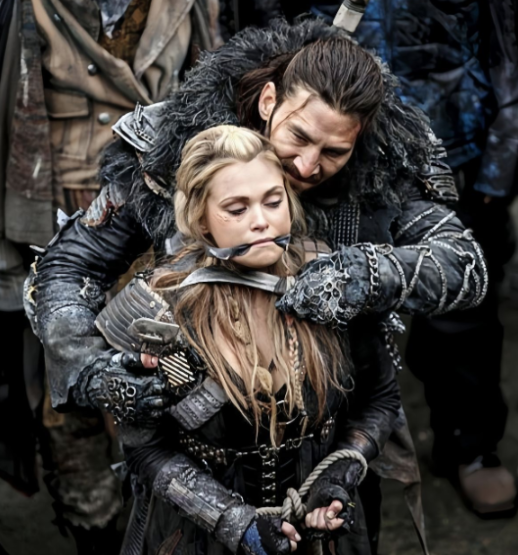
The beginning does not waste time setting up slow context or calm scenes. Things already feel off, and characters are not in stable positions. Clarke is separated, which immediately shifts focus away from group safety. The moment alone creates a different kind of pressure compared to earlier episodes. There is no sense of control anywhere, even when people try to act organized.
Clarke’s situation shows survival without support systems
Clarke is the one handling threats independently throughout the episode. This time, she does not have a group or organized scheme to support her. Her choices come from instinct and past experience rather than discussion. This makes her actions feel quicker and sometimes harsher. It also highlights how isolation changes decision-making under pressure.
Looking at the Wanheda part one recap in practical terms
In a basic Wanheda Part One recap, the episode focuses on tracking, capture attempts, and survival moves. Clarke is being hunted because of her reputation, not just her actions. That reputation creates problems she cannot easily avoid. At the same time, other groups are trying to locate her for different reasons. This creates overlapping conflicts happening at once.
Arkadia struggles to stay stable internally
Back at Arkadia, things are not as controlled as they might seem. Leadership faces pressure from both inside and outside threats. There are disagreements about how to handle grounded relations and security. These internal conflicts slow down decision-making. It shows that even organized groups can struggle when facing multiple problems at once.
Grounder politics remain complicated and tense
The grounders are not acting as a single unified group. Different factions have their own goals and priorities. This makes interactions unpredictable, especially for outsiders. Alliances do not feel secure, and trust is limited. These conditions increase the risk of conflict even when cooperation might be more useful.
Bellamy’s role becomes more active again
Bellamy moves into a position where he has to take action rather than observe. His involvement increases as situations become more unstable. He deals with both emotional and practical challenges at the same time. This creates tension in how he approaches decisions. His actions reflect the pressure of balancing loyalty with responsibility.
The idea behind the 100 recap Wanheda context
When considering the 100 recap, Wanheda, the episode sets up larger conflicts rather than resolving anything fully. It introduces new threats while continuing older ones. This creates a layered situation that does not settle quickly. The episode feels more like a starting point for multiple storylines than a complete arc. That structure makes it feel unfinished but intentional.
Capture and escape patterns repeat, but feel different
There are familiar elements like capture attempts and escapes, but they carry more weight here. These situations are not just about immediate danger. They connect to reputation, alliances, and long-term consequences. This makes them feel more important, even if the actions look similar to earlier episodes. The context changes how they are perceived.
Leadership decisions are slower than expected
Leaders hesitate more in this episode compared to earlier moments. This hesitation comes from uncertainty rather than weakness. They are dealing with incomplete information and multiple risks at once. Acting too quickly could make things worse. This slower approach affects how events unfold and adds tension.
Movement between locations creates uneven pacing
The episode shifts between different places without always maintaining a smooth flow. Some scenes feel rushed, while others take longer to develop. This uneven pacing can feel slightly disjointed. However, it reflects the scattered nature of events happening simultaneously. It requires attention to keep track of different storylines.
Reputation starts driving conflict more than actions
Clarke’s identity as Wanheda becomes a central issue. People react to what she represents rather than what she is currently doing. This creates situations where she is targeted without direct interaction. Reputation becomes a form of power and danger at the same time. It influences decisions across different groups.
Conclusion
The episode works more as a setup than a complete story, focusing on establishing tension across multiple fronts. Clarke’s isolation highlights how survival changes without group support, while Arkadia’s struggles show that structure does not remove uncertainty. Grounder politics continue to add complexity, making alliances difficult to maintain. Reputation becomes a driving force, shaping conflict in ways that go beyond direct action. Overall, the episode builds pressure rather than resolving it, setting the stage for further developments that rely on the unstable conditions introduced here.