
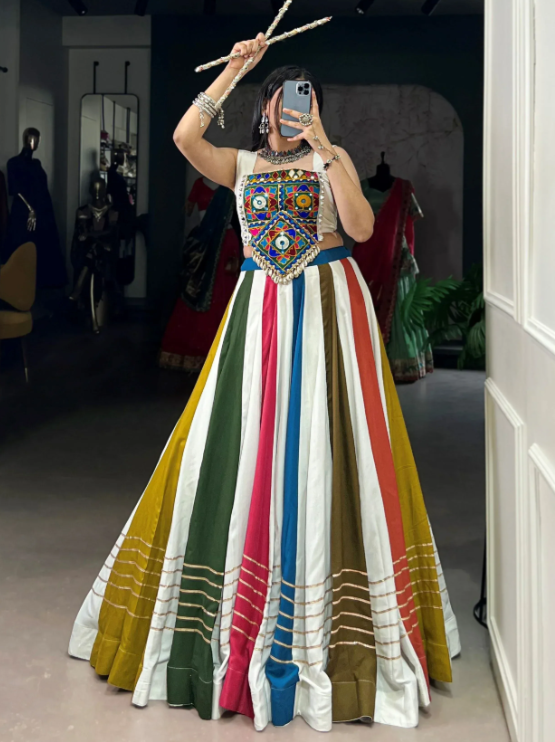
Festival dressing thrives on distinctive detail, and current navratri choli designs reflect this clearly. From traditional mirror work to modern digital prints, choli styles now offer far more variety than the standard embroidered blouse of years past.
This growing variety means dancers and festival-goers can express individual style within the shared tradition of Navratri, rather than choosing between only a handful of repeated, generic patterns each season.
Traditional Techniques Making a Comeback
Hand embroidery techniques like aari and gota patti work have seen renewed popularity, offering intricate detail that machine embroidery cannot fully replicate. These techniques add texture and depth that catches light beautifully during evening dance sessions.
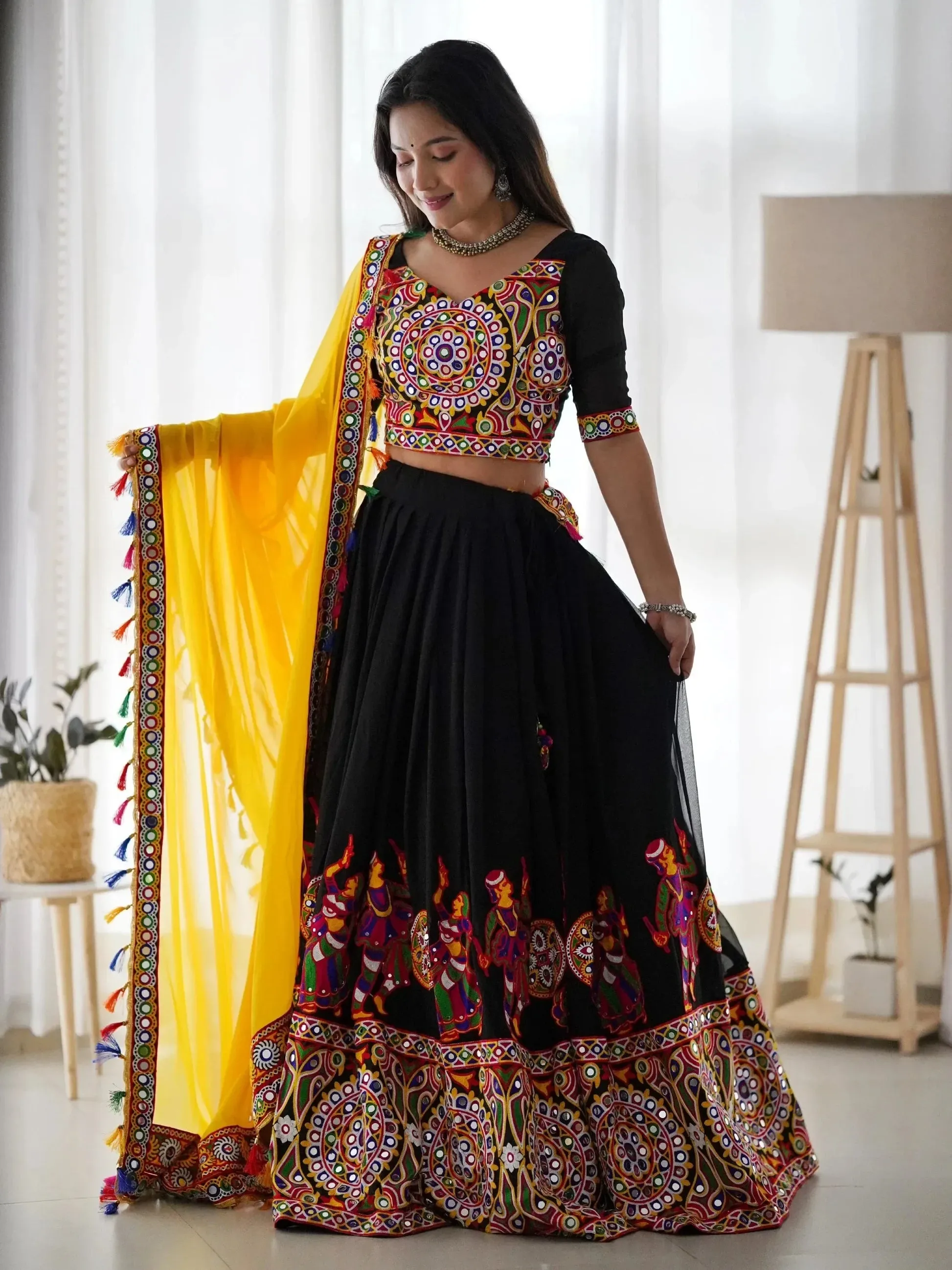
For a bold evening statement, a black mirror work chaniya choli combines dramatic color contrast with reflective embellishment, creating a striking silhouette that stands out clearly under string lights and stage lighting common to garba venues.
Choosing a Choli Style for Your Body Type
Different necklines and sleeve styles suit different body types and comfort preferences. Considering these factors before choosing a design helps ensure the choli feels as good as it looks across a full evening of dancing.
-
Choose a deeper neckline for warmer evening events.
-
Try full sleeves for more coverage and support.
-
Consider a fitted waist for a defined silhouette.
-
Pick adjustable ties for a more customizable fit.
Mixing Prints and Embroidery Thoughtfully
Combining a printed skirt with an embroidered choli, or vice versa, creates visual interest without overwhelming the outfit. This contrast approach has become increasingly popular among younger festival-goers looking for a fresher take on tradition.
Sticking to a cohesive color family across both pieces, even when mixing print and embroidery, helps the outfit feel intentional rather than mismatched, keeping the overall look polished despite the combination of different techniques.
Color Trends for This Festival Season
Jewel tones like emerald, royal blue, and magenta continue to dominate Navratri color choices, offering vibrancy that photographs well under both daylight and evening event lighting throughout the nine-night celebration.
-
Choose emerald or royal blue for a rich evening look.
-
Try magenta or coral for daytime festival events.
-
Consider black for dramatic contrast under stage lighting.
-
Pick pastels for a softer, daytime-appropriate alternative.
Caring for Detailed Choli Pieces
Mirror work and embroidered cholis require gentle handling to prevent embellishments from loosening during repeated wear across the festival. Hand washing or dry cleaning is generally safer than machine washing for these detailed pieces.
Storing cholis flat or on padded hangers, rather than folded tightly, helps preserve embroidery shape and prevents mirror work from catching or snagging against other garments in storage between festival seasons.
Where to Shop for Unique Choli Designs
Local Navratri markets often carry limited-run designs not found in mainstream retail, offering a chance to find something more distinctive. Online boutiques specializing in festival wear have also expanded significantly in recent years.
Comparing a few sellers before committing helps buyers spot genuine craftsmanship versus mass-produced imitation work, particularly for pieces featuring hand embroidery or mirror work where quality can vary considerably between different sources and price points.
Budgeting for a Full Festival Wardrobe
Since Navratri spans multiple nights, planning a budget across several outfits helps avoid overspending on any single piece. Mixing one or two statement cholis with simpler, reusable pieces balances cost against festival variety.
Renting statement pieces for just one or two nights has also become a popular option, allowing dancers to wear more elaborate designs without the full cost of an outright purchase for a garment worn only briefly each season.
Passing Down Festival Pieces
Well-made cholis with quality embroidery often last long enough to be worn across multiple festival seasons, or even passed on to younger family members, making the initial investment feel worthwhile over several years of use.
Conclusion
Navratri choli designs have expanded well beyond basic embroidered blouses, offering distinct techniques, prints, and silhouettes suited to individual style. This variety allows festival dressing to feel personal within a shared cultural tradition.
Choosing a design that suits both your comfort and personal aesthetic ensures the choli supports rather than hinders a full evening of dancing, letting the celebration itself remain the true focus of the night.